
Thymosin Alpha-1 3 mg
Thymosin Alpha-1 3 mg - Immune Support Peptide
Thymus-derived immune modulating peptide. Researched for T-cell activation, antiviral defense, and immune support protocols. Check vial, label, and supplier.
Thymosin Alpha-1 3 mg - Immune Peptide Overview
Thymosin Alpha-1 3 mg is a lyophilized immune peptide vial from Generic Peptides. The active substance is Thymosin Alpha-1, a synthetic analogue of the naturally occurring peptide derived from the thymus gland. Users commonly search for this product as Thymosin Alpha 1, Ta-1, thymalfasin, and immune peptide.
What Is Thymosin Alpha-1?
Thymosin Alpha-1 is a 28-amino acid peptide originally isolated from thymosin fraction 5, a thymus gland extract. It is a naturally occurring immunomodulatory peptide central to T-cell maturation and immune system regulation. The synthetic version - thymalfasin - is approved as a pharmaceutical in multiple countries for treatment of chronic hepatitis B and C and as an immune adjuvant in oncology. In peptide research communities, Thymosin Alpha-1 is studied for broad immune-modulating properties, antiviral signaling, anti-inflammatory effects, and recovery support.
Why Users Search for Thymosin Alpha-1 3 mg
Research interest in Thymosin Alpha-1 3 mg centers on immune modulation, T-cell function enhancement, antiviral defense, and recovery support. The 3 mg vial is the smaller format in the Generic Peptides Thymosin Alpha-1 range, discussed in community references for introductory immune support protocols or researchers preferring lower total peptide content per resupply cycle. Search discussions compare the 3 mg and 5 mg formats for protocol length and per-injection dose planning.
- Active substance: Thymosin Alpha-1 - naturally occurring thymus-derived immunomodulatory peptide researched for T-cell activation and antiviral defense.
- Product format: Lyophilized vial requiring reconstitution with bacteriostatic water before subcutaneous injection.
- Research context: Immune modulation, T-cell activation, antiviral signaling, and recovery support protocols.
- Vial size context: 3 mg is the smaller entry-level format - compared to the 5 mg vial for researchers planning extended immune support protocols.
Thymosin Alpha-1 3 mg Dose and Concentration Information
Thymosin Alpha-1 3 mg is listed at 3 mg per vial. The lyophilized vial requires reconstitution with bacteriostatic water before subcutaneous injection. Community references discuss the 3 mg vial as the smaller entry-level format suited for introductory immune support protocols or researchers preferring lower total milligrams per resupply interval.
Commonly Referenced Context
In community research discussions, Thymosin Alpha-1 is referenced as a subcutaneous injection peptide used in immune modulation and recovery frameworks. The 3 mg vial is discussed as a starting point for researchers new to Thymosin Alpha-1 or those running shorter protocol cycles. Reconstitution volume calculation is a frequently referenced topic given the total content and the importance of precise dosing in immune-support research. Daily or every-other-day subcutaneous injection is the most commonly cited administration frequency in community references.
- Format context: Lyophilized vial - reconstitution with bacteriostatic water required before subcutaneous injection.
- Dosing frequency: Daily or every-other-day subcutaneous injection is most commonly referenced in community research discussions about Thymosin Alpha-1 protocols.
- Injection route: Subcutaneous injection is the primary route referenced for Thymosin Alpha-1 in community research discussions.
- Storage: Lyophilized vials stored as directed before reconstitution; reconstituted Thymosin Alpha-1 refrigerated and used within the stability window referenced in community guides.
- Bloodwork context: Immune markers, T-cell counts, and inflammatory markers are referenced in Thymosin Alpha-1 monitoring discussions in clinical and community research contexts.
Thymosin Alpha-1 3 mg Stack Context
Thymosin Alpha-1 3 mg is commonly discussed in immune health, recovery, and peptide research communities. Community search context for Thymosin Alpha-1 3 mg primarily involves vial size comparison with the larger format, combination with recovery peptides, and immune support protocol planning. This section covers common search context, not a personalized protocol.
Commonly Discussed Context
- Thymosin Alpha-1 vial size comparison: Researchers evaluating protocol length and total peptide requirements frequently compare the 3 mg vial with Thymosin Alpha-1 5 mg. The 3 mg format is discussed as the smaller entry-level option suited for introductory immune support protocols or researchers preferring lower total peptide content per resupply interval.
- Thymosin Alpha-1 and BPC-157 combination: Community research discussions frequently reference BPC-157 5 mg alongside Thymosin Alpha-1 in immune-recovery research frameworks - BPC-157 for tissue healing and gut repair, Thymosin Alpha-1 for immune modulation and T-cell activation.
- BPC-157 alternative format: Researchers planning combined recovery and immune protocols occasionally evaluate BPC-157 10 mg alongside Thymosin Alpha-1 3 mg when matching vial content to protocol length and resupply frequency.
- TB-500 combination context: Community references occasionally discuss TB-500 2 mg alongside Thymosin Alpha-1 3 mg in combined tissue repair and immune modulation research frameworks, pairing systemic recovery signaling with T-cell support.
- Protocol duration planning: Community references frequently discuss Thymosin Alpha-1 protocol length and injection frequency as key considerations when choosing between the 3 mg and 5 mg vial formats - matching total vial content to planned protocol weeks and per-injection dose targets.
Support Topics
Thymosin Alpha-1 3 mg community research discussions focus primarily on immune function monitoring, subcutaneous injection technique, reconstitution best practices, and cold-chain storage. T-cell count tracking and inflammatory marker monitoring are referenced alongside Thymosin Alpha-1 research protocols in clinical contexts. Bacteriostatic water reconstitution, injection site rotation, and refrigerated storage are the most consistently referenced practical support considerations.
Thymosin Alpha-1 3 mg Side Effects and Risk Overview
Thymosin Alpha-1 3 mg has a risk profile commonly discussed in immune peptide research communities. Search topics usually include injection site reactions, immune activation concerns, reconstitution risks, interactions with autoimmune conditions, and the absence of long-term data in healthy non-clinical populations.
Commonly Discussed Risks
- Injection site reactions: Mild redness, swelling, or discomfort at the subcutaneous injection site are the most commonly referenced local reactions in Thymosin Alpha-1 community research discussions.
- Immune modulation concerns: Thymosin Alpha-1 stimulates T-cell activity and immune function. Community references note that individuals with autoimmune conditions should consider this immune-activating effect before initiating research protocols, as enhanced immune activity may interact with existing autoimmune disease processes.
- Fatigue and flu-like symptoms: Temporary fatigue, mild fever, or flu-like symptoms shortly after injection are occasionally referenced in community discussions, attributed to immune activation responses, particularly in early protocol stages.
- Reconstitution and storage risks: Improper reconstitution, use of incorrect solvent, heat exposure, or incorrect storage can degrade peptide integrity - a consistently referenced practical risk in community discussions about research-grade peptides including Thymosin Alpha-1.
- Interaction with immunosuppressive therapies: Community references note that Thymosin Alpha-1's immune-activating properties may interact with immunosuppressive medications - a relevant topic in clinical and research discussions involving concurrent treatments.
- Limited long-term data in healthy populations: Clinical use of thymalfasin is established in immunocompromised and viral hepatitis populations. Community references consistently note the absence of long-term safety data in otherwise healthy individuals as a primary research consideration.
Generic Peptides Thymosin Alpha-1 3 mg Verification
Verification for Thymosin Alpha-1 3 mg should focus on the label, concentration, active substance, manufacturer, pack size, vial condition, and supplier history. Confirming the 3 mg concentration and active substance (Thymosin Alpha-1) on the label is important - confusion between Thymosin Alpha-1 and Thymosin Beta-4 (TB-500) is a common sourcing concern, as both are thymus-derived peptides with different mechanisms. Also confirm the 3 mg format versus the 5 mg vial before ordering.
Verification Checklist
- Product name should match the listing: Thymosin Alpha-1 3 mg.
- Active substance should be listed as Thymosin Alpha-1 - not Thymosin Beta-4, TB-500, or another thymosin variant.
- Concentration should match 3 mg per vial - not the 5 mg format.
- Pack format should match a single vial containing lyophilized white powder.
- Manufacturer should be listed as Generic Peptides.
- The vial should contain lyophilized (freeze-dried) white powder - any vial arriving as liquid or showing discoloration should be treated as a quality concern.
- Label consistency, seal condition, batch details, supplier reputation, cold-chain handling, and authenticity resources should be reviewed before purchase.
Thymosin Alpha-1 3 mg FAQ - Frequently Asked Questions
Real questions people search about Thymosin Alpha-1 3 mg and immune peptide research - answered for product research context.
Common Questions About Thymosin Alpha-1 3 mg
Related Products
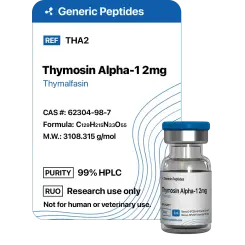
Thymosin Alpha-1 2 mg
Immune peptide in a lyophilised 2 mg vial. Commonly researched for immune modulation, T-cell activity, and immune support context. Check vial, label, and supplier.
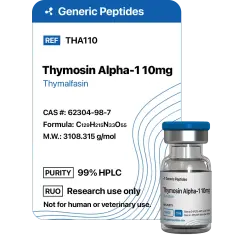
Thymosin Alpha-1 10 mg
Immune peptide in a lyophilised 10 mg vial. Commonly researched for immune modulation, T-cell activity, and immune support context. Check vial, label, and supplier.
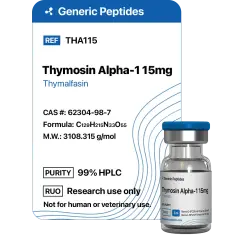
Thymosin Alpha-1 15 mg
Immune peptide in a lyophilised 15 mg vial. Commonly researched for immune modulation, T-cell activity, and immune support context. Check vial, label, and supplier.
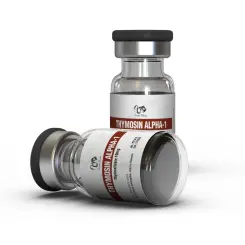
Thymosin Alpha-1 - Immune Modulating Peptide 10 mg
28-amino acid thymic peptide for immune modulation. Activates T-cells, NK cells, and dendritic cells; used in immune support, chronic infection, and anti-aging protocols. Also known as TA-1, Thymalfasin, and Zadaxin. Check vial, label, and supplier.

Thymosin Alpha-1 5 mg - Immune Support Peptide
Thymus-derived immune modulating peptide. Researched for immune function support, antiviral activity, and recovery enhancement. Check vial, label, and supplier.