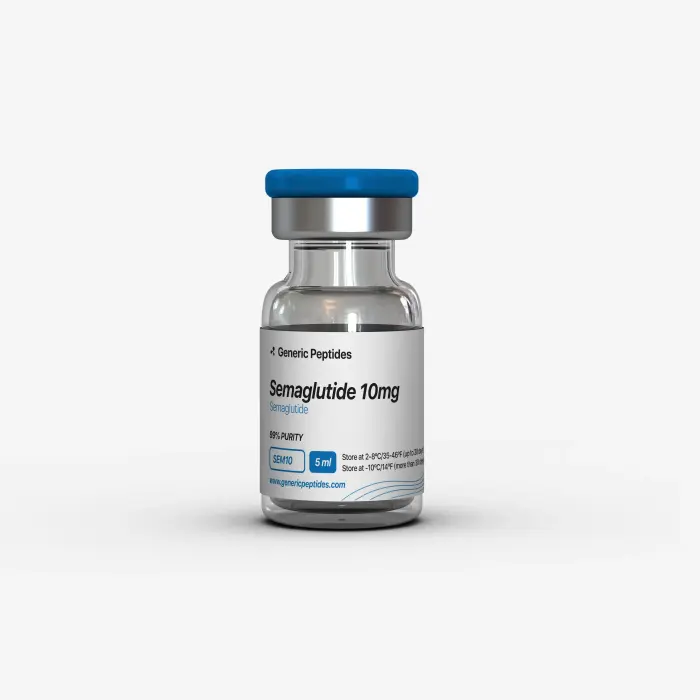
Semaglutide 10 mg
Semaglutide 10 mg - GLP-1 Receptor Agonist
GLP-1 receptor agonist peptide. Commonly searched as Semaglutide 10 mg, GLP-1 large vial, or Semaglutide extended protocol. Check label, concentration, and supplier before ordering.
Semaglutide 10 mg GLP-1 Peptide Overview
Semaglutide 10 mg is a GLP-1 receptor agonist peptide from Generic Peptides. The active substance is Glucagon-Like Peptide-1 (GLP-1), a 34-amino acid incretin peptide analogue. Users commonly search for this product as Semaglutide 10 mg, GLP-1 10 mg, large Semaglutide vial, and Semaglutide extended protocol.
What Is Semaglutide?
Semaglutide is a GLP-1 (Glucagon-Like Peptide-1) receptor agonist - a synthetic analogue of the naturally occurring incretin hormone GLP-1. It binds to GLP-1 receptors and is studied for its effects on appetite regulation, gastric emptying, insulin secretion, and glucagon suppression. In community research discussions, semaglutide is primarily referenced in the context of weight management and metabolic health research. Pharmaceutical versions are marketed under brand names such as Ozempic and Wegovy; research-grade semaglutide is discussed in peptide research communities as lyophilized vials for reconstitution.
Why Users Search for Semaglutide 10 mg
The 10 mg vial is the largest Semaglutide format offered by Generic Peptides, above the 2 mg and 5 mg vials. Community references discuss it in the context of longer protocols, higher weekly dose targets, or extended research planning where a larger total vial content reduces the frequency of resupply. Search queries commonly include Semaglutide 10 mg, GLP-1 10 mg, large Semaglutide vial, and Semaglutide long protocol.
- Main compound: Glucagon-Like Peptide-1 (GLP-1) - semaglutide, a long-acting GLP-1 receptor agonist.
- Product type: Lyophilized peptide vial requiring reconstitution with bacteriostatic water before subcutaneous injection.
- Common names: Semaglutide, GLP-1 peptide, Ozempic research peptide, Semaglutide 10 mg large vial.
- Product context: Largest GLP-1 vial format; discussed for extended protocols or higher weekly dose targets alongside the 2 mg and 5 mg formats and compared with Tirzepatide in weight management peptide research communities.
Semaglutide 10 mg Dose and Concentration Information
Semaglutide 10 mg is listed at 10 mg per vial. The lyophilized vial requires reconstitution with bacteriostatic water before subcutaneous injection. Community references discuss semaglutide in terms of weekly subcutaneous injections, dose titration protocols, and total vial content relative to weekly dose targets.
Commonly Referenced Context
In community research discussions, semaglutide is commonly referenced as a once-weekly subcutaneous injection. The 10 mg vial is discussed for longer protocols or higher weekly dose targets, where researchers calculate how many weekly doses are available from a single vial based on their mcg or mg target. At commonly discussed weekly amounts, the 10 mg vial provides an extended supply before resupply is needed. Dose titration - starting with a lower weekly amount and increasing gradually - is one of the most consistently referenced protocol planning topics in GLP-1 community research.
- Format context: Lyophilized vial - reconstitution with bacteriostatic water required; subcutaneous injection into abdomen, thigh, or upper arm as commonly referenced in protocol discussions.
- Dosing frequency: Once-weekly subcutaneous injection is the most commonly referenced administration frequency for semaglutide in community and clinical research context.
- Titration context: Community references consistently describe starting with lower weekly amounts and titrating upward over several weeks to manage gastrointestinal side effects. The 10 mg vial suits longer protocols or higher weekly dose targets.
- Storage: Lyophilized vials stored as directed before reconstitution; reconstituted semaglutide refrigerated and used within the stability window referenced in community guides.
- Bloodwork context: Fasting glucose, HbA1c, lipid panel, and body weight tracking are the most commonly referenced monitoring markers alongside semaglutide use.
Semaglutide 10 mg Stack Context
Semaglutide 10 mg is commonly discussed in weight management, metabolic health, and GLP-1 research communities. Community search context for semaglutide primarily involves GLP-1 class comparisons and vial size selection rather than traditional stack combinations. This section covers common search context, not a personalized protocol.
Commonly Discussed Context
- Semaglutide vs Tirzepatide comparison: The most frequently searched GLP-1 comparison topic. Tirzepatide 5 mg is a dual GIP/GLP-1 receptor agonist, while semaglutide targets only GLP-1 receptors. Community research frequently discusses the two agents side by side in terms of weight loss outcomes, side effect profiles, and protocol differences.
- Tirzepatide alternatives: Users researching GLP-1 options frequently compare semaglutide with Tirzepatide 10 mg and Tirzepatide 2 mg when selecting between GLP-1 and dual GIP/GLP-1 mechanisms for their research protocol.
- Vial size comparison: Users planning protocol duration commonly compare the 10 mg vial with Semaglutide 5 mg and Semaglutide 2 mg to match total weekly dose requirements to vial content. The 10 mg vial is discussed as the largest format suited for extended protocols or higher weekly dose targets.
- Titration context: Community discussions frequently reference starting doses and titration schedules as a primary protocol planning topic for GLP-1 research, with the 10 mg vial discussed as a convenient format for researchers seeking fewer resupply cycles.
- Support context: Gastrointestinal symptom management, hydration, fasting glucose monitoring, and lipid panel tracking are the most frequently referenced support topics in semaglutide research discussions.
Support Topics
GLP-1 community research consistently addresses nausea, vomiting, and gastrointestinal discomfort as the most common side effect management topics during semaglutide protocols. Bloodwork monitoring for fasting glucose, HbA1c, and lipids is also frequently referenced. Unlike anabolic peptides, semaglutide community discussions do not address hormone suppression, PCT, or estrogen management.
Semaglutide 10 mg Side Effects and Risk Overview
Semaglutide 10 mg has risks commonly discussed by users researching GLP-1 receptor agonist peptides and weight management protocols. Search topics usually include gastrointestinal side effects, injection site reactions, blood glucose effects, and titration-related concerns.
Commonly Discussed Risks
- Nausea and vomiting: Nausea is the most consistently referenced side effect of semaglutide and GLP-1 receptor agonists. Community references address nausea as dose-dependent and most prominent during the early titration phase, often reducing over time as the body adapts.
- Gastrointestinal effects: Diarrhea, constipation, bloating, and abdominal discomfort are frequently discussed alongside nausea as a cluster of GLP-1 class side effects commonly referenced in community research discussions.
- Hypoglycemia risk: Community references note that while semaglutide alone carries a low hypoglycemia risk, combination with other glucose-lowering agents or prolonged fasting can increase this risk. Blood glucose monitoring is frequently referenced as a precautionary measure.
- Injection site reactions: Redness, itching, or swelling at the subcutaneous injection site are commonly referenced as minor side effects in GLP-1 peptide research discussions.
- Fatigue and appetite suppression: Significant appetite reduction is a primary researched effect of semaglutide; excessive suppression leading to inadequate caloric intake and fatigue is referenced as a practical consideration in community discussions.
- Pancreatitis risk: Medical literature references pancreatitis as a risk associated with GLP-1 receptor agonist class drugs. Community discussions frequently cite abdominal pain as a symptom requiring medical evaluation during GLP-1 protocols.
- Reconstitution and storage risks: Improper reconstitution, use of non-bacteriostatic water, heat exposure, or incorrect storage can degrade peptide integrity - a consistently referenced practical risk in community discussions about research-grade semaglutide.
Generic Peptides Semaglutide 10 mg Verification
Verification for Semaglutide 10 mg should focus on the label, concentration, active substance, manufacturer, pack size, vial condition, and supplier history. Confirming the 10 mg concentration and active substance (GLP-1 / semaglutide) on the label is important - confusion between GLP-1 vial sizes and between semaglutide and tirzepatide is a common concern in peptide product research.
Verification Checklist
- Product name should match the listing: Semaglutide 10 mg.
- Active substance should be listed as Glucagon-Like Peptide-1 (GLP-1) / Semaglutide.
- Concentration should match 10 mg per vial.
- Pack format should match a single vial containing lyophilized white powder.
- Manufacturer should be listed as Generic Peptides.
- The vial should contain lyophilized (freeze-dried) white powder - any vial arriving as liquid or showing discoloration should be treated as a quality concern.
- Label consistency, seal condition, batch details, supplier reputation, cold-chain handling, and authenticity resources should be reviewed before purchase.
Semaglutide 10 mg FAQ - Frequently Asked Questions
Real questions people search about Semaglutide 10 mg and GLP-1 receptor agonist peptides - answered for product research context.
Common Questions About Semaglutide 10 mg
Related Products
Tirzepatide 10 mg - Dual GIP/GLP-1 Receptor Agonist
Dual GIP/GLP-1 receptor agonist peptide. Commonly searched as Tirzepatide 10 mg, Mounjaro large vial, or dual incretin extended protocol. Check label, concentration, and supplier before ordering.
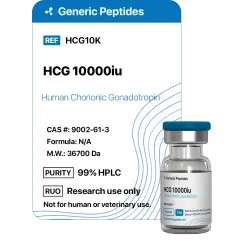
HCG 10000 IU - Human Chorionic Gonadotropin Vial
PCT gonadotropin peptide. Commonly searched as HCG 10000, Pregnyl 10000, or gonadotropin for post cycle. Check vial label and supplier before use.
Tesamorelin 10 mg - Growth Hormone Releasing Peptide
Growth hormone releasing factor analogue peptide vial. Commonly searched as Tesamorelin 10 mg, GHRH analogue large vial, or Tesamorelin extended protocol. Check label, concentration, and supplier before ordering.